

Farmland Access 2025 In A Nutshell

By Bonnie Warndahl
Well, it's been quite a year, but we have made it through. Despite all of the challenges our partners have faced within the Farmland Access Hub, we still succeeded in getting an amazing amount of work accomplished—and so much learning!
In October, both the Wisconsin and Minnesota state hubs had their annual in-person meeting. The Minnesota Hub met at the Minnesota Farmers Union headquarters in St. Paul for a full day of discussion, brainstorming, and sharing of resources and new ideas.
The Wisconsin Hub Partners met at the Goodman Community Center in Madison, Wisconsin, with a robust chat about the state of funding, policy, and the need for raising public awareness around farmland access and transition issues.
In other news, the Upper Midwest Farmland Access Network (UMFAN) has dropped a letter and picked up partners as we become the Midwest Farmland Access Network (MFAN) with the addition of Ohio and Indiana to our existing network of Michigan, Illinois, Minnesota, and Iowa.
In November, this broader group met with facilitator Lisa Munniksma, who is the former host of the Hobby Farms Presents: Growing Good podcast. Lisa is a writer and facilitator for organizations working in food systems. The MFAN group decided to move forward with a facilitation process in which Lisa will conduct three sessions, one per month, with a core group of individuals to explore how this greater network can work together and identify common goals across regions and organizations. The facilitation process should be wrapped up in February or March.
In early December. Renewing the Countryside convened staff and contractors from the Farmland Access Program, the Go Farm Connect program, and RTC's new Farm Business Management Program—all of which will be housed under RTC's Farm Viability Program.
This three-day retreat included introductions to how this new system will work, including a new intake process that will serve all three programs to offer farmer clients more well-rounded support for all of their land access and farm business needs.
On days one and two, Connectors and Navigators were provided training on farm business management and farm financial planning basics. Then, on day three, navigators went much deeper into farm financials with Tera Johnson, founder of the Food Finance Institute (FFI).
Tera’s deep dive launched us to a new level of farm business planning, accessing lending, and other forms of raising equity for farm businesses. And while it was intense for us, it feels like we just chipped the tip of the iceberg. I found it to be an inspiring and necessary session, which I think sent most of us home with full brains and a new appreciation for the complexities of farm financial planning.
As someone who used to be terrified of financial planning and using spreadsheets,
I learned through managing my own farm business how empowering it is to really understand your financials. This is a lesson I try to pass on to my clients as much as possible. Much of the work that Navigators and Connectors do is to help farmers get prepared for purchasing or renting land. Bookkeeping is a central part of that. You can't write a business plan if you don't know your numbers, and you can't get to knowing your numbers until you’ve got a good bookkeeping system.
I frequently hear, “No one gets into farming to do the bookkeeping and the marketing,” which might be true, but you can learn to enjoy it—or at least get confident with it. Farming is a business, and business planning should come first. It shouldn't be an afterthought. If we're going to change our farming and food system to be more valued, it needs to start with farmers valuing themselves and their time first. You need to understand how profitable businesses work, and then you have to tackle the challenge of making a farm business profitable, which, as we all know, is not an easy task.
Harmony, Minnesota Farm Transition Story
Another victory this year was the completion of a project by the Engaging Landowners Working Group, in partnership with Region Nine Development Commission, led by Sabri Fair, the Land Stewardship project led by Karen Stettler, and Renewing the Countryside, led by yours truly.
The goal of this project was to produce a video about a successful farm transition in Harmony, Minnesota. It is the first of five planned video projects to capture the stories of farm transitions in the region between non-family members. With grant funds secured by RNDC, we hired the talented Phil Kraus from Kraus Creative Company LLC.
This first video tells the story of Harvey Benson and Bonita Underbakke, and next-generation farmers, Amy and Aaron Bishop, of Harmony, Minnesota. The 160-acre farm was transferred by use of a $1 Quit Claim Deed with a Right of Re-entry, ultimately allowing Amy and Aaron to take over the farm debt-free. It's a beautiful story told by beautiful people. You can enjoy this short teaser and watch for the release of the full video in the new year!
Great Lakes Farm Navigators
Another project that has ultimately wrapped up this year is the Great Lakes Farm Navigator Project through American Farmland Trust. The Great Lakes Navigators had their final meeting as a full group in Toledo, Ohio, in October. Additional funding will continue to support navigators for professional development goals in 2026 for farmers in Michigan, Wisconsin, and Ohio.
USDA Land Capital and Market Access Funding
The Land Capital and Market Access grant continues to support some of the farmland access work for Renewing the Countryside, American Farmland Trust, and the Food Finance Institute. Progress has been made on two Buy-Protect-Sell farm transitions, including one in the Milwaukee area and one in the Madison, Wisconsin area.
In both cases, AFT has purchased the farm or is helping to transition the farm to new ownership with the implementation of an Agricultural Conservation Easement (ACE). These two BPS projects will enable a new farm incubator project to begin in Milwaukee, and a perennial u-pick fruit farm in the Madison area, as well as providing a permanent home base for the Paw Paw Project.
Easement funding, which the LCM grant was supposed to provide, has still not been accessible, but the ACEs were nevertheless achieved through other means, such as a family gift and a donation. Our partners at Groundswell helped to execute the Madison BPS.
Thanks to all our partners for your dedication to this work, helping to keep farmland in farming and farmers on the land!
November Farmland Access Bus Tour in MN!
By Laura Cullip and Mikell Melius

On Monday, November 3, Renewing the Countryside hosted a Farmland Access Bus Tour, highlighting two successful farmland transitions supported by The Farmland Access Hub.
Relyndis and Marius Tegomoh’s farm, Kisheri Farms, was the first stop. This family worked to purchase farmland from a local organic farmer, Melissa Driscoll at Seven Songs Farm, who was ready to transition their land after 15 years of stewardship. With support from Erik Heimark and Laura Cullip—Renewing the Countryside’s Farmland Access Navigator and Farm Business Management Specialists—and partners like Farm Service Agency and Compeer Financial, they made their dream of owning a farm in Minnesota a reality.
Melissa and her husband, Jay, as part of their farmland transition plan, made an intentional decision to sell their farm to a BIPOC farmer. Melissa had experience buying and putting easements on DNR land and was very familiar with the land transition process. With support from the Land Stewardship Project over the years, Melissa and Jay were practiced at using values-based goals in their farming and life decisions. They were committed to taking the time necessary (as much as 10 years) to make a thoughtful transition; however, that long timeline was not needed. Relyndis and Marius were well-prepared buyers. They worked closely with Erik Heimark on the production and financial records needed for the FSA downpayment assistance loan with Compeer. After months of paperwork and planning, Kisheri Farms was able to purchase the farm in early 2025 and experience a full growing season on their own farm.

As a result, Relyndis—once growing African and Western crops in her Roseville backyard and through The Food Group’s Big River Farms—has expanded her production, selling to the Mill City Farmers Market, caterers, food shelves, schools, and more. She is excited to expand the existing flock of layer chickens for their egg CSA, sell more plant starts to her cultural community, put up a second hoop house, and diversify her operation in 2026! Relyndis continues to receive wrap-around technical assistance from Laura and Erik at RTC and others, in addition to ongoing advice and hands-on support from Melissa.

Next stop was Earth2Table Farm, a partnership between Vincent and Gloria Kimaiga and Vincent’s parents, Japheth and Eucabeth. After immigrating from Kenya in 2008, they began growing crops through community gardens and later at Kilimo MN, an incubator farm for African immigrant growers. In 2023, Vincent was looking for land to purchase and happened to speak with a landowner in the Northfield area who had a 9-acre farm in his family and seemed interested in selling it in the future. He got in touch with Katie Kubovcik, an RTC Farmland Access Navigator, and with Katie’s support, they worked with the landowner to eventually sell this farm in the Northfield area. By connecting with Katie, Vincent learned about FSA’s Beginning Farmer Loan, which opened the door to farm ownership for his family. Working together, Vincent applied for and accessed an FSA Beginning Farmer Loan, turning their vision for a family farm into reality. To read more about Vincent’s story, check out the November 2024 Farmland Access Hub newsletter article.
Seeing these transitions come full circle reminds us how collaboration, intention, and patience can protect farmland and get it in the hands of new, emerging farmers. Thank you to all who were able to attend, and to Keepsake Cidery for the delicious lunch.
Thanks also to Brian DeVore at Land Stewardship Project for writing a lovely article on Melissa and Jay's farm transition to Relindys and Marius. Read more about their transition story here.
From WWOOFer to Farmer
By Melissa Pylipow
Submitted by Jenna Pollard, Membership Program Manager, WWOOF USA

In 2018, I decided to leave my hometown in Missouri at the age of 23, taking a year to go WWOOF on the West Coast. With very little gardening experience, I was eager to try something new. My first stop was at Gardenripe, in Silverton, Oregon.
This 137-acre farm, owned by Bill and Janice Schiedler, has been in Bill's family for over 150 years. Continuing in the path of his ancestors, Bill farmed produce organically, providing for his local community.
After five months of working with Bill, I left to WWOOF in California for another 7 months. In the fall of 2019, I returned to Gardenripe to WWOOF there for another 3 months. Once again, I left, but then returned yet again in the spring of 2020, not to WWOOF this time, but to rent a house from Bill and pursue an opportunity in Silverton to grow produce for a local restaurant in town.
That following year, I leased some land from Bill and started my own business growing flowers and herbs. One day, I mentioned to him, "You know, I love growing flowers, but I think I like growing produce more," and with that, a seed was planted. Soon after, Bill approached me with an offer to purchase his business, while continuing to grow produce on his land through a rental agreement. Gardenripe is a well-established name in the community. Bill was looking to retire from farming, but didn't want to leave the community without the produce it had come to rely on. This business transfer would be a win for both of us. He could move on to less-strenuous work, and I could continue to strengthen my skills and knowledge of farming. I accepted his offer, and the next year Bill and I worked alongside each other.
In 2023, the torch was fully passed. I have since merged my passion for flowers and herbs with my passion for growing produce, and for keeping the Gardenripe name alive in the community, selling locally through farmers markets, restaurants, and hospitals.
This arrangement has been a dream come true. Now, at the age of 30, I've had the honor of hosting over 40 incredible WWOOFers. Many have communicated the inspiration I bring as a young female farmer who started with little experience, not too long ago. This is my goal—to teach and inspire. This work may be hard, but it is so rewarding.
While this opportunity with Gardenripe is temporary (due to not owning the land), I am learning how to farm and to manage an operation of this size, and what it takes to be successful. One day, my goal is to continue this life I’ve created on my own land. In the meantime, I take it day by day, enjoying the classroom of life.
WWOOF and the Future Farmer Program:
For over 50 years, Worldwide Opportunities on Organic Farms (WWOOF) has been connecting people with organic farmers to promote education, cultural exchange, and sustainable agriculture. WWOOF-USA continues this mission by offering hands-on farm training at over 1,000 US farms and homesteads, fostering a community committed to ecological farming. To further its mission, WWOOF-USA launched the Future Farmer Program in 2021, providing mentorship, practical training, and financial assistance for aspiring farmers. This year, 25 grants of $4,000 are being awarded to dedicated participants for a 10-week WWOOF farm visit, which includes on-farm training and a Crop Production course through Tufts University. Through these initiatives, WWOOF is cultivating the next generation of organic farmers while increasing farm operator diversity across the USA.
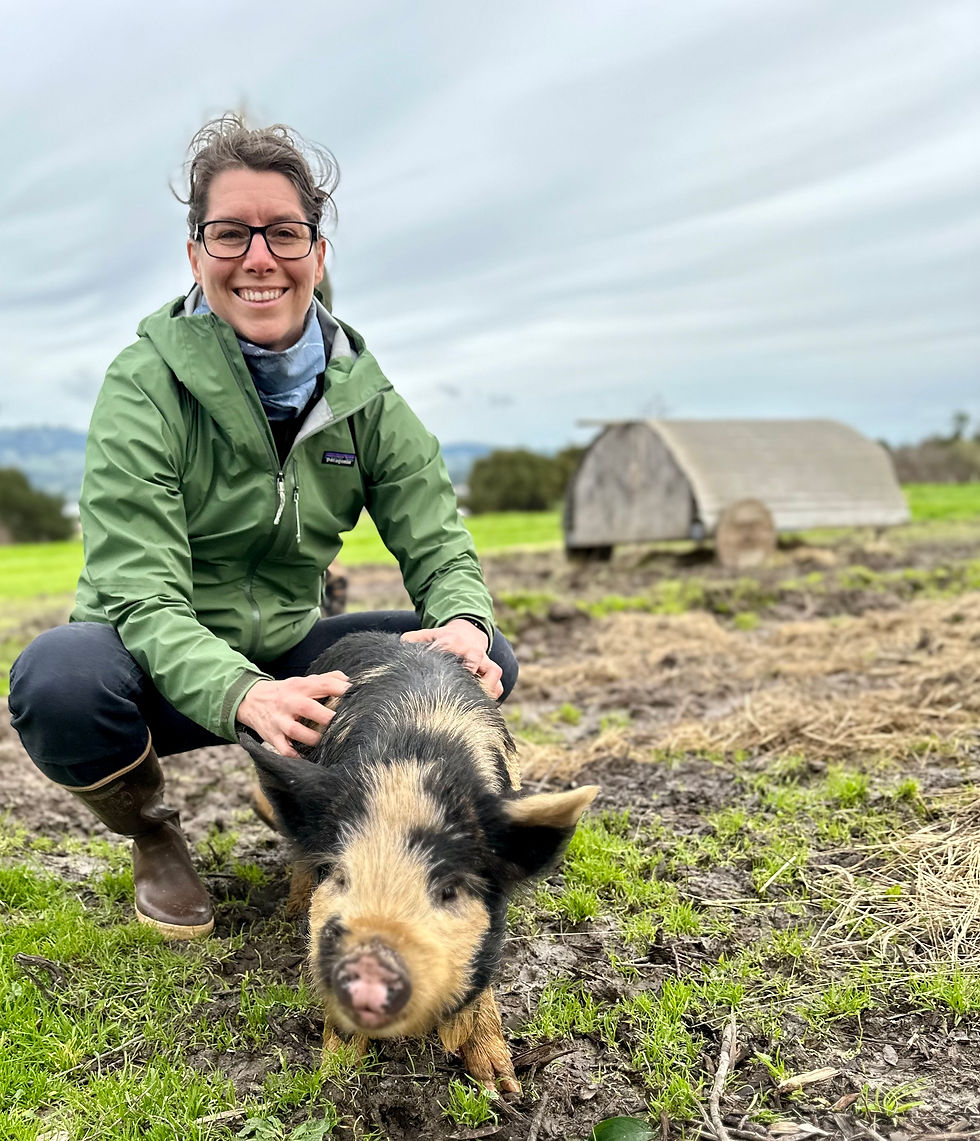
Jenna Pollard is WWOOF-USA's Engagement and Educational Program Manager, bringing nearly a decade of experience in fostering connections between aspiring farmers and organic agriculture. Her deep-rooted passion for organic farming and education drives her leadership of WWOOF’s Future Farmer Program, which provides hands-on training and financial support for individuals dedicated to sustainable agriculture. Based in northern Minnesota, Jenna works remotely alongside her partner, who operates an organic vegetable farm. When she’s not helping shape the future of farming through WWOOF, she enjoys making maple syrup, cross-country skiing, and teaching the craft of traditional timber framing.
Back-To-The-Land in Wadena, MN
By Kent Sheer
During the 1970s and 80s, the Back-To-The-Land Movement brought young outsiders
to Wadena and this region in surprising numbers. They tended to be in their thirties,
progressive, and free-thinking. They came on a dream of independence combined with
a desire to homestead, grow healthy food, and live self-sufficiently. They also came at a
time when our own young people were leaving in droves, never to return. These new people made a difference. As they matured and became settled, some helped to innovate exceptional projects like the Cultural Center, Wadena Beautification, and the Whiskey Creek Film Festival.
This is worth noting because there is a return to the dream of back-to-the-land living today. The Twin Cities alone are rich with young people yearning and training to start a small homestead. That same desire to grow whole foods on a small landholding has come back in spades. And once again, it is arriving at an important time. American Farmland Trust predicts that 40% of American farmland must change hands in the next 20 years—and that is a problem because the costs are now so huge. Yet, locally, it does not mean things are impossible. Just as it was in the 1970s, farmland in North-Central Minnesota sells dirt cheap on the national scale. People are coming here because they can hardly believe the costs compared to other states, like Iowa, Pennsylvania, Ohio, and Idaho.
At least six new rural homesteaders have arrived in our region in the past couple of years, and more are coming. The problem is that farm holdings are now whoppingly large and more expensive than they once were. These properties are much larger than the new breed of sustainable farmers needs. Many plan to work just 5 to 40 acres by intensive methods such as CSAs, winter greenhouses, aquaculture, agroforestry, mushrooms, goats, and farmstays.
Here in Minnesota, there are organizations devoted to helping these aspiring
farmers to find their home and get prepared. The Farmland Access Hub includes partners such as the Land Stewardship Project, Marbleseed, and Renewing the Countryside, while also supporting the Farmland Access Navigator program to coach farmers through the process of preparing for and accessing land tenure. Dozens of partner organizations across the Midwest are all working hard on this mission because it has grown so hugely important.
As local residents, we can do our part by simply being aware that this is happening. We can be ready to offer welcome and support. We should wrap newcomers into our area culture and our small community rather than leaving them outside to wonder. Also, watch for affordable farmland and notify the organizations listed above. Finally, farmers who love their land and its legacy could subdivide into 20s and 40s specifically for the sustainable farming newcomers searching to find their rural home. Wadena is beginning to see this migration, and it will again bring new thought and possibilities just as it did in the 1970s and 80s.
One point remains to be made, and that is climate migration. Part of this move to our area will be an act of escaping someplace else. Someplace that grew too hot, or too dry, or too polluted, or too flooded. Climate migration has been expected for the past 20 years and is already happening across the world. Minnesota is especially known as the water state, and water is the new gold for migration. Also, climate change is making us appear almost cool and comfortable as well. ProPublica and other climate mappers predict that the last best American farmland will have been pushed to the upper half of Minnesota and North Dakota by 2050. That brings us a problem. It’s predicted that large water-gulping businesses will vie to grab it first. Giant feedlots, huge power generation, irrigated industrial agriculture, and even bottled water plants go where there is flow. Our township and county boards must be alert, prepared, and protective. And every regular citizen needs to finally understand this unique natural wealth that we all own together, and together, must protect.
Consider how much better it will be for us, for the future, and for our grandchildren if the flood of newcomers are homesteaders, sustainable farmers, and folks following a small-town dream…the ones once called Back-To-The-Landers.
The Farmland Access Hub Offers A New Farm-seeker Toolkit
By Kara Komoto
The Farmland Access Hub is excited to announce that we have recently launched a Farmland Seeker Toolkit on our website! You can access the toolkit and pointers for utilizing it here.
The toolkit is a collection of worksheets and resources that assist farmland seekers throughout the land access process. It is designed for users to progress section by section to hone in on their goals, identify suitable options, assess readiness, and implement strategies for accessing land. The toolkit will walk land seekers through nine sections:
Farming Goals & Priorities
Farmland Access Options
Preparation: Farming Experience & Skills
Preparation: Your Finances
Preparation: Business Planning
Financing Options
Create Your Farmland Search Plan
Securing Land: Property Evaluation and Agreements
Putting It All Together: Your Farmland Access Plan
On the webpage, click on each section to read a description of its purpose and view the accompanying worksheets and resources. Some of the worksheets are still in development, but most of them are available for your use (you can fill them out digitally or print them to fill out by hand)! Make sure to check back periodically for updated worksheets and resources. If you feel it would be helpful to work through the toolkit with navigator support, you are welcome to complete our intake form.
Accessing Farm Capital Resources
In August, Navigators Bonnie Warndahl and Laura Cullip participated in a Go Farm Connect webinar series aimed at providing beginner-level business planning and financial resources to farmers. These webinars were recorded and posted to the Go Farm Connect YouTube channel for anyone to access. Please share these informational webinars widely with your farmer networks!
It’s Game On for Farmland Summit, 2026

Glimmerings of planning for the farmland summit have begun! It has been decided that the third-ever Upper Midwest Farmland Summit will be held in Madison, Wisconsin, in the fall of 2026, so stay tuned for more information, as we will soon be looking for sponsors and participants who are interested in joining planning committees.
The last Farmland Summit was held in the fall of 2023 at the Minnesota Landscape Arboretum. Approximately 200 participants came from the Midwest and beyond for two days of sessions and networking. Day one encompassed a full day of group learning with speakers such as Zach Ducheneaux, former FSA Administrator, and Kathy Ruhf from Land for Good.
Day two included four blocks of breakout sessions, all focused on different Farmland Access & Transition challenges, techniques, and resources. The event left most folks feeling pretty inspired and eager for the next one. Personally, I'm excited to get planning our next big Farmland Access & Transition event.
If you are interested in being on a planning committee or sponsoring the summit, please reach out to me at bonnie@rtcinfo.org.

Happy Holidays from all of us at Renewing the Countryside and the Farmland Access Hub! It's been a pleasure to continue this important work with you over the last year, and we're looking forward to continuing to make positive impacts on farming and food systems in 2026!

